
 Inksky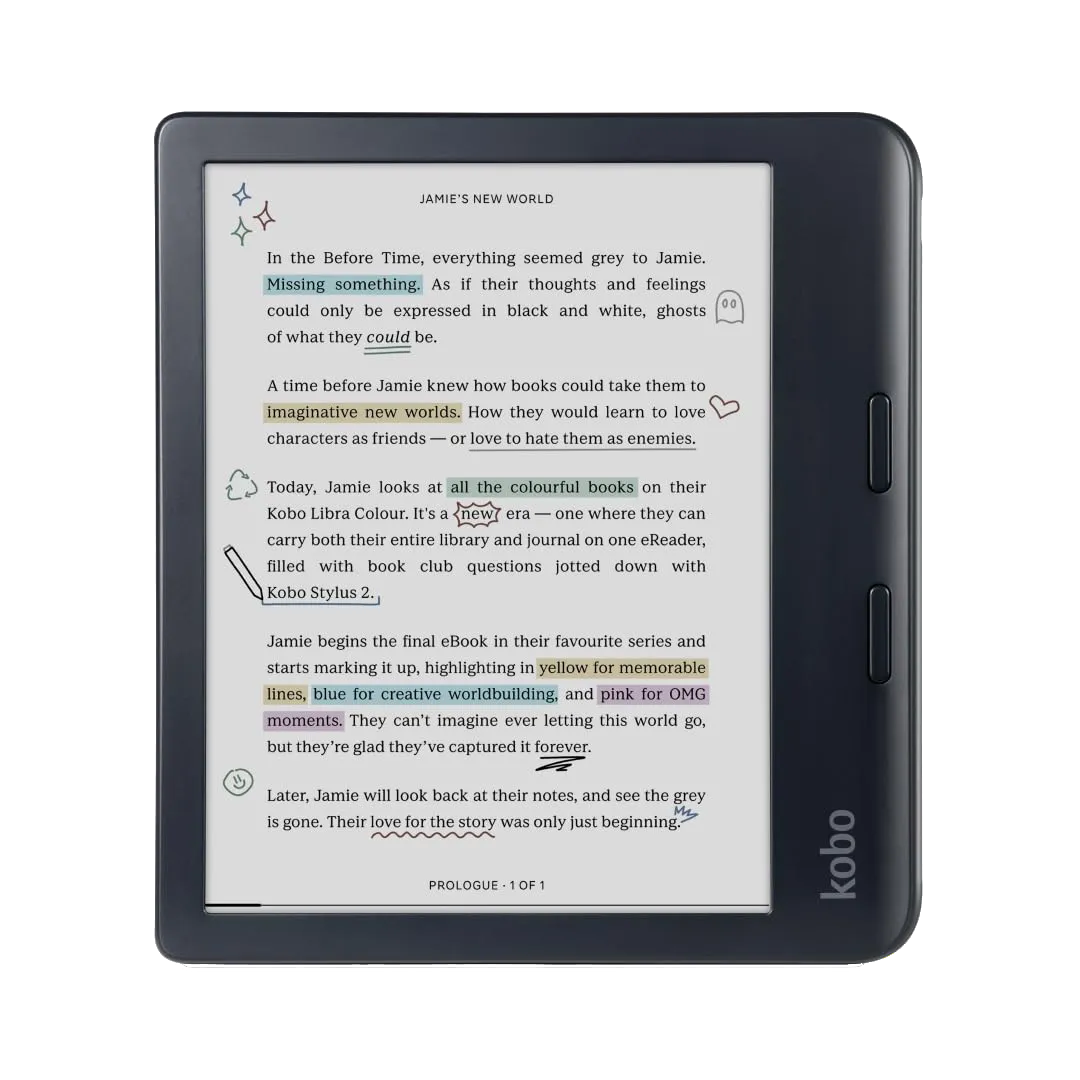
Halfway through 2026, a few clear trends are emerging in the e-reader space. Color displays are finally crossing from niche to mainstream, subscription reading continues to grow, and public library digital lending is having its biggest year ever. Here’s what the numbers say and what it means for readers.
Color E Ink goes mainstream
Color e-readers are no longer a curiosity. Kobo’s Libra Colour — launched in mid-2024 and now in its second year — has become Kobo’s best-selling device, according to Rakuten’s most recent earnings call. The Kindle Colorsoft, despite mixed reviews for color saturation, sold well enough that Amazon is actively developing a second-generation model with supply chain sources pointing to a Q4 2026 launch window.
PocketBook entered the color race with the Era Color, and Boox has color variants across its entire line — from the 7-inch Go Color 7 to the 10.3-inch Tab Ultra C Pro. The result: roughly 30% of new e-readers sold in Q2 2026 had color displays, up from under 10% in the same period last year, per data from Display Supply Chain Consultants (DSCC).
Two factors are driving adoption. First, E Ink’s Kaleido 3 Plus panel — a refinement of the existing Kaleido 3 — has improved saturation and reduced ghosting enough that color content (comics, illustrated books, magazines, even color-coded notes) feels usable rather than experimental. Second, the price gap between color and monochrome models has narrowed to roughly $30–50, down from $100+ two years ago. At that delta, most buyers are opting for color “just in case.”
Kindle Unlimited crosses 4 million
Amazon hasn’t publicly broken out Kindle Unlimited subscriber numbers since 2023, but multiple publishing industry sources and author royalty pool reports now peg KU at approximately 4.1 million subscribers globally — up from an estimated 3.5 million in early 2025. The growth is driven largely by international expansion (India, Brazil, and Japan have been particularly strong) and an increasingly deep catalog that now includes over 4 million titles.
KU’s dominance in the subscription reading space is essentially unchallenged. Kobo Plus — Kobo’s answer to KU, launched in the US and UK in 2023 — has grown to roughly 800,000 subscribers, respectable but a fraction of Amazon’s base. The difference comes down to catalog depth: KU’s exclusivity requirements for participating authors means Amazon has titles — especially in romance, thriller, and sci-fi — that no other platform can offer.
For readers, the message is clear: if you read more than 2–3 books per month and your tastes align with KU’s catalog strengths, the $11.99/month subscription is a straightforward value proposition.
Library digital lending up 40% year-over-year
Here’s the most encouraging number: digital library borrowing on OverDrive-powered platforms (Libby and on-device Kobo integration) is up roughly 40% year-over-year in the US, according to OverDrive’s mid-year report. That translates to approximately 330 million ebook and audiobook checkouts in the first half of 2026 alone.
Kobo remains the only major e-reader brand with native, on-device library borrowing — you can browse, borrow, and read library books without touching a phone or computer. It’s a meaningful advantage that Kobo highlights in marketing, and the growth numbers suggest it’s working. Kindle users can still access library books through Libby’s “Send to Kindle” feature, but the friction of using a separate device for browsing and borrowing makes the experience notably less smooth.
What this means for the second half of 2026
Three things to watch: Amazon’s Colorsoft 2 launch (likely October/November) will test whether color demand holds up when the “new thing” excitement fades for the original; Kobo has a window to grow Kobo Plus if they can land a few high-profile exclusives; and library borrowing rates will almost certainly set new records by December. For readers, it’s a good time to be in the market — more choice, better color displays, and easier access to free books than ever before.